

How to Renovate an Old Swimming Pool Properly
- services9139
- 4 days ago
- 6 min read
A pool can look tired long before it stops working. Stained tiles, rough plaster, cracked coping, dim lights, and a noisy pump all affect how people use the space. But the most costly problems are often hidden below the waterline or inside the plant room. Knowing how to renovate an old swimming pool starts with identifying what is cosmetic, what is failing, and what must be corrected before new finishes are installed.
For homeowners, a renovation is an opportunity to improve appearance and reduce recurring repair work. For facilities managers and club operators, it is also a matter of safety, water quality, operating continuity, and user satisfaction. A proper renovation plan addresses the pool shell, waterproofing, circulation system, lighting, and finish as one connected system.
Start With a Full Condition Assessment
Do not choose new tiles or a new pool color before the pool has been inspected. An old pool may have visible defects that point to a larger issue: loose tiles can indicate failed adhesive or water movement behind the finish, while repeated water loss may come from a structural crack, leaking pipe, damaged fitting, or a failed waterproofing layer.
The first step is to document the pool's current condition. Look at the basin, surrounding coping and deck junctions, expansion joints, skimmer or overflow system, return inlets, drains, lights, and equipment. Check whether the water level drops when the pump is off as well as when it is running. This helps narrow down whether a leak may be in the structure or the circulation plumbing.
A technical assessment should also include pressure testing of relevant pipe runs, inspection of pumps and filters, and a review of electrical components. Old underwater light cables, junction boxes, and connections deserve particular attention. Water and electricity require careful, compliant work, not a quick patch.
Separate Cosmetic Defects From Structural Problems
Surface staining, faded grout, and minor etching may be resolved through preparation and refinishing. Cracks, hollow-sounding tiles, persistent leaks, rust marks, or deteriorating concrete require more investigation. Covering these issues with a new finish can make the pool look better for a short time, but it does not stop the underlying failure.
It also matters whether the pool has been maintained consistently. A pool with poor water balance may have damaged plaster, tiles, metal fittings, and equipment over several years. In a high-use commercial pool, wear around steps, handrails, overflow channels, and suction points can be more significant than it appears during a quick walk-through.
How to Renovate an Old Swimming Pool in the Right Order
A pool renovation works best when the sequence is planned before demolition begins. Start with structural and water-retention work, then repair or upgrade the mechanical and electrical systems, and finish with surfaces and visual improvements. This order prevents new work from being damaged or removed later to access a problem below it.
After the pool is drained, the existing finish may need to be removed in affected areas or across the entire basin, depending on its condition and the selected new finish. Contractors can then inspect the substrate, repair cracks, rebuild damaged edges, replace defective fittings, and prepare the surface for waterproofing and finishing.
If the pool has a history of leaks, waterproofing should be treated as a core scope item rather than an optional extra. The right system depends on the pool construction, existing finish, moisture condition, and intended new surface. Preparation is critical. Waterproofing products cannot compensate for loose substrates, active cracks, poorly repaired penetrations, or unsuitable surface preparation.
Once structural repairs and waterproofing are complete, the pool can receive its new finish. Tile, mosaic, plaster-style surfaces, and fiberglass solutions each have different installation requirements, maintenance needs, and costs. The best choice depends on the pool's use, the desired appearance, available downtime, and the condition of the existing shell.
Choose Upgrades That Improve Daily Operation
An old pool renovation should not focus only on what is visible from the deck. Equipment upgrades can reduce breakdowns, improve circulation, and make routine maintenance more manageable.
A pump that is oversized, poorly located, or nearing failure can cause unnecessary noise, energy use, and service disruption. Relocating the pump system may improve access for maintenance and allow the plant area to be organized more safely. Any relocation must be designed around proper pipe sizing, suction conditions, drainage, electrical supply, and future service access.
Filters, valves, piping, and dosing arrangements should be assessed as a working system. Replacing one component without understanding the rest of the system can create poor flow or repeated faults. For facilities with frequent use, reliable circulation and filtration are directly linked to water clarity and the pool's ability to remain open.
Upgrade Lighting and Underwater Cabling
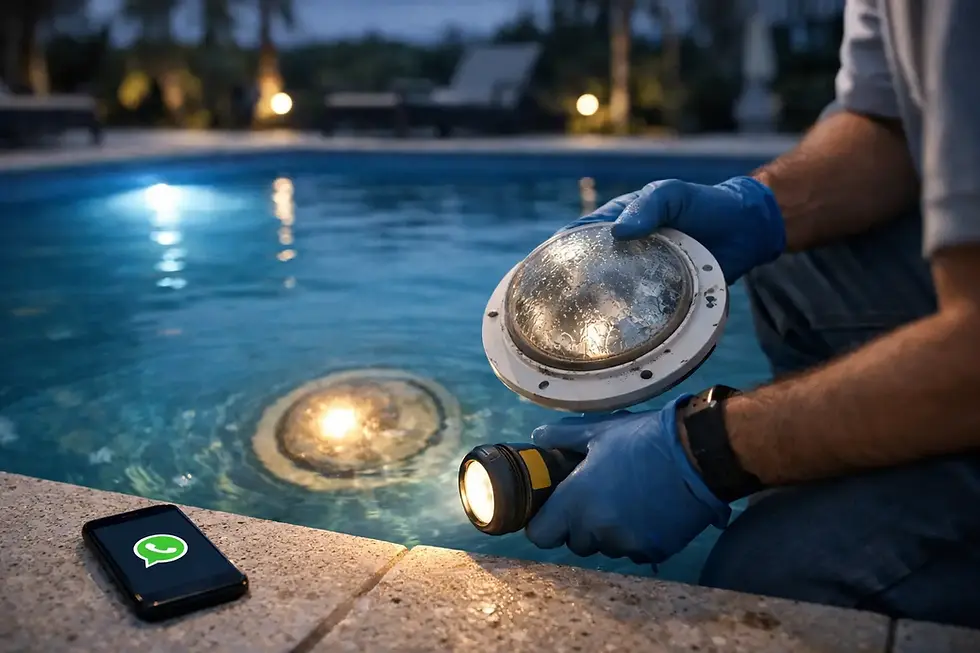
Old pool lights are often dim, inefficient, or unreliable. LED pool lighting can improve visibility, create a cleaner appearance, and reduce the need for frequent lamp replacement. However, the installation must address more than the light fitting itself.
Underwater cabling, conduits, connections, transformers, and control equipment all need to be suitable for the environment. Waterproof cable work and proper electrical protection are essential. If lights have repeatedly failed or water has entered a fitting, investigate the complete circuit rather than replacing the visible fixture alone.
Consider Overflow-to-Skimmer Conversion Carefully
Overflow pools provide a particular visual effect, but their systems can be more demanding to maintain. Where an overflow configuration is no longer practical, an overflow-to-skimmer conversion may simplify operation and address ongoing issues with channels, balance tanks, or related pipework.
This is not a minor alteration. It can involve changes to the pool edge, drainage arrangement, circulation hydraulics, and finish details. The decision should be based on the condition of the existing system, operational needs, budget, and the appearance the property wants to retain.
Plan the Finish Around Use, Not Just Appearance
Every finish has trade-offs. A premium tile finish can offer a refined look and long service life when installed correctly, but it requires careful substrate preparation, quality adhesive work, and sound grout or joint detailing. Plaster-style finishes can provide a classic pool appearance, though they are more sensitive to water chemistry and can show wear over time.
Fiberglass can be a practical option for certain renovation scopes, particularly where a continuous surface and easier cleaning are priorities. Liner-to-fiberglass conversion may also be worth considering when an aging liner has become a recurring source of replacement cost and leakage concerns. Suitability depends on the pool structure, geometry, and preparation requirements.
Color selection should also be practical. Very light finishes can show stains and debris more readily, while very dark finishes may make it harder to see the pool floor clearly in some lighting conditions. For commercial and shared facilities, visibility and ease of maintenance should carry as much weight as style.
Control Scope, Timing, and Access Before Work Begins
Pool renovation projects often grow when hidden damage is uncovered. That is normal in aging pools, but it should be managed through a clear inspection process, documented repair recommendations, and communication before additional work proceeds.
For occupied residences, clubs, and commercial sites, access planning matters. Confirm where materials will be staged, how debris will be removed, when noisy work can take place, and how the work area will be secured. If the pool is part of a facility schedule, plan the shutdown period around peak usage where possible. Rushing curing time, waterproofing work, or testing just to reopen faster can create avoidable failures.
Before appointing a pool renovation specialist, ask four practical questions:
What testing will be completed before finishes are selected?
How will structural repairs, waterproofing, and pipe defects be addressed?
Which equipment upgrades are necessary now, and which can be planned for later?
What testing and commissioning will be completed before the pool returns to service?
Clear answers separate a surface makeover from a proper technical renovation. An experienced pool contractor should be able to explain the scope in plain language, identify risks early, and coordinate the structural, mechanical, and electrical work without passing responsibility from one party to another.
RS Pools approaches renovation with that full-system view. A pool should look renewed, but it should also circulate properly, hold water reliably, remain safe to operate, and be easier to maintain after handover.
The right time to begin is before small defects become a forced closure or a major reconstruction. Start with an honest assessment, prioritize the work that protects the structure and operating system, and choose finishes that suit how the pool will actually be used for years to come.


Comments