

Swimming Pool Defect Guide for Property Owners
A pool can look clean and still have a serious problem developing behind the tiles, below the deck, or inside the plant room. This swimming pool defect guide helps property owners and facility teams recognize early warning signs, understand what may be causing them, and decide when prompt professional attention is required.
Small defects rarely stay small in a working pool. A loose tile can expose waterproofing. A minor circulation issue can affect water quality. A slow leak can damage surrounding structures and raise water bills long before the source becomes visible. The right response is not to guess at the repair, but to identify the symptom, assess the risk, and investigate the system properly.
Swimming Pool Defect Guide: Start With What You Can See
Visual inspections are useful because many pool defects announce themselves through changes in the finish, water level, or surrounding surfaces. They should be carried out routinely, especially for older pools, heavily used facilities, and pools that have recently undergone renovation work.
Cracked tiles, missing grout, and hollow areas
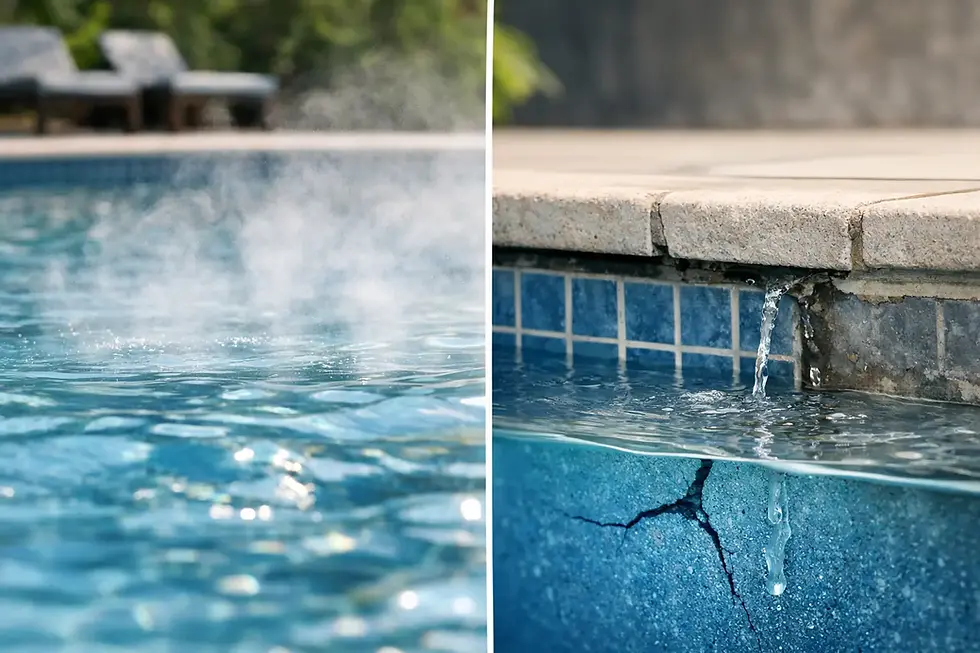
A hairline crack in one tile may be cosmetic, but a pattern of cracked or loose tiles deserves closer attention. Tiles may fail because of movement in the pool shell, poor bonding, aging grout, water ingress behind the finish, or impact damage. When tiles sound hollow under a light tap, it can indicate that the adhesive bond has deteriorated.
Missing grout is not just an appearance issue. Open joints allow water to travel behind the tile surface, where it may affect the tile bedding and waterproofing layer. In a pool with frequent chemical exposure and constant wet conditions, that process can accelerate quickly.
Avoid patching multiple areas repeatedly without checking why they are failing. Localized tile repairs are suitable where the issue is isolated. Widespread cracking, hollow tiles, or recurring grout failure may point to a larger waterproofing or substrate problem that needs a more complete repair scope.
Cracks in the pool shell or coping
Not all cracks carry the same level of urgency. Fine surface cracks in a finish may be limited to the render or coating. Wider cracks, cracks that continue across several surfaces, or cracks that grow over time require investigation. Water loss, staining around the crack, and tile displacement are further warning signs.
Coping cracks and movement at the pool edge can also indicate stress between the pool structure and adjacent finishes. This is particularly relevant where there are changes in deck levels, settlement, or repeated expansion and contraction from heat and weather exposure.
A qualified assessment should determine whether the crack is superficial, caused by shrinkage, or associated with structural movement. The repair method depends on that finding. Simply sealing a structural crack at the surface may hide the symptom while allowing water to continue moving through the shell.
Stains, rough surfaces, and finish deterioration
Brown, green, black, or white marks can come from different sources, including metal staining, algae, calcium deposits, damaged coatings, or chemical imbalance. The correct treatment depends on the cause. Aggressive cleaning or acid washing without diagnosis can damage a tired finish and shorten its remaining service life.
A rough pool surface often develops when calcium scale builds up or the finish starts to break down. If swimmers report sharp spots, exposed aggregate, or discomfort on steps and benches, treat this as a safety and maintenance issue rather than a purely cosmetic one. It may be time for targeted resurfacing, a liner-to-fiberglass conversion, or another finish renewal solution based on the existing pool construction.
Water Loss Is Not Always Evaporation
Water naturally drops through evaporation, splash-out, backwashing, and cleaning activity. However, a pool that needs frequent top-ups may have a leak. The difference matters because concealed leaks can affect the pool shell, deck structure, plant room, and operating costs.
A simple bucket test can provide an initial indication. Place a bucket filled with pool water on a pool step, mark the water levels inside and outside the bucket, and compare the drop after 24 hours with the circulation system kept in the same operating condition. If the pool water drops noticeably more than the bucket water, further leak investigation is sensible.
Leaks may occur through cracked pipes, failed fittings, light niches, skimmer connections, damaged waterproofing, or defects around returns and drains. If water loss increases while the pump is running, pressure-side plumbing may be involved. If loss is more pronounced with the system off, suction lines or the pool structure may be more likely. These are clues, not a final diagnosis.
Do not rely on repeated topping up as a solution. In addition to wasting water, a leak can destabilize chemical balance and conceal more extensive damage. Professional testing can isolate the source before repair work begins.
Equipment Defects That Affect Pool Operation
The plant room is where many operational defects begin. Pumps, filters, valves, piping, electrical connections, and control equipment work together. A fault in one component can place extra strain on the rest of the system.
Weak circulation, cloudy water, and poor filtration
Cloudy water is often treated as a chemical problem first, but inadequate circulation or filtration may be the actual cause. A blocked filter, worn pump impeller, leaking suction line, undersized equipment, incorrect valve position, or poor return flow can all reduce the system's ability to keep water clear.
Look for weak flow from return inlets, air bubbles entering the pump basket, unusually high filter pressure, or a pump that loses prime. A noisy pump can also indicate bearing wear, cavitation, blockage, or a suction-side air leak. Continuing to run equipment under these conditions may turn a repairable fault into a pump replacement.
For commercial and club facilities, poor circulation affects more than appearance. It can lead to inconsistent disinfectant distribution, user complaints, and operational disruption. Equipment should be assessed against the pool's current use, not only the specification it had when first installed.
Leaks and corrosion in the plant room
Water beneath pumps, filters, or pipe joints should never be ignored. It may come from a failing mechanical seal, loose union, cracked fitting, damaged valve, or pressure-related problem. Corrosion on electrical enclosures, bonding points, or equipment frames is equally concerning in a humid pool environment.
Temporary tightening may stop a drip, but it will not resolve a cracked fitting or an incorrectly supported pipe run. A proper repair should address the component condition, pressure demands, access for future servicing, and the cause of the failure.
Electrical and lighting faults
Flickering underwater lights, repeated tripping, water inside a light fitting, or damaged cable routes require immediate attention. Underwater electrical work must be handled correctly, with suitable waterproof connections and proper testing. Do not treat pool lighting as a decorative add-on when there is evidence of water ingress or electrical instability.
Modern LED replacements can improve energy use and visual quality, but compatibility with existing niches, transformers, wiring, and control systems must be checked first. The best upgrade is one that is safe, serviceable, and suitable for the pool environment.
Safety Defects Need a Faster Response
Some defects can wait for planned repair work. Others should be isolated or addressed without delay. Sharp edges, broken drain covers, unstable ladders, loose handrails, exposed cabling, damaged steps, and slippery finish failures can create immediate hazards for pool users.
Drain covers deserve particular attention. A damaged, loose, or unsuitable cover is not a minor replacement item. It must be correctly matched, secured, and maintained as part of the pool's safety system. Similarly, a handrail that moves under load is not safe simply because it remains in position when untouched.
For facilities managers, documenting defects with dates, photos, and operating observations creates a clearer maintenance record. It also helps distinguish a one-off issue from a recurring defect that needs a different repair strategy.
When Repair Is Enough and When Renovation Makes More Sense
The right solution depends on the defect pattern, pool age, downtime requirements, and long-term operating goals. Repair is usually practical when damage is localized and the supporting systems remain sound. Renovation becomes more cost-effective when defects recur across multiple areas or when outdated systems are contributing to ongoing maintenance costs.
For example, recurring tile and waterproofing failures may justify a finish conversion rather than repeated patch repairs. An old overflow system that is difficult to maintain may be a candidate for conversion to a skimmer arrangement, subject to the pool design and intended use. A cramped or poorly arranged plant room may benefit from pump system relocation during a larger upgrade.
The most reliable recommendation comes after a site assessment that considers the structure, waterproofing, plumbing, electrical work, equipment condition, and the way the pool is actually used. Treating each symptom separately can seem less expensive at first, but it often leads to repeated disruption and inconsistent workmanship.
RS Pools approaches pool defects with that full-system view, from urgent repair support to structural renovation and equipment upgrades. A clear diagnosis, a defined repair scope, and accountable execution give owners a better basis for protecting their pool investment.
When a defect appears, act before it becomes an operating emergency. Early inspection gives you more repair options, better control of costs, and a safer pool for every user.


Comments