

Do Commercial Pools Need Renovation Permits?
- services9139
- 2 days ago
- 5 min read
A pool closure caused by an approval issue can cost a club, hotel, or property manager far more than the renovation itself. So, do commercial pools need renovation permits? In many cases, yes - but the exact approvals depend on the scope of work, the building, and whether the work affects structure, safety systems, plumbing, electrical services, or the pool’s intended use.
For a commercial facility in Singapore, a simple cosmetic refresh may not trigger the same submission requirements as a major pool conversion or plant room upgrade. The right approach is to assess the work before demolition begins, identify the authorities and building requirements involved, and prepare the necessary architectural and M&E documentation where required.
When Commercial Pool Renovation Permits Are Likely Needed
The word renovation can cover very different types of pool work. Replacing a few damaged tiles is not the same as changing an overflow pool into a skimmer system, moving pumps, or rebuilding a leaking shell. Permit and submission requirements usually become more likely when the project changes how the pool is constructed, drained, powered, or operated.
Structural work is a clear example. Repairs that involve the pool shell, surrounding reinforced concrete, retaining elements, or major waterproofing failures may need professional assessment and formal approval. This is especially relevant for rooftop pools, elevated decks, podium pools, and facilities above occupied spaces, where water loading and leakage can affect the building below.
Mechanical and electrical changes can also require attention. A pool circulation system involves pumps, filters, pipework, electrical controls, lighting, drainage, and sometimes chemical dosing equipment. Relocating a pump system, increasing equipment capacity, modifying pipe routes, or adding new electrical circuits is more than a visual upgrade. These changes may require M&E submissions, inspections, or coordination with the building’s existing services.
Approval considerations are also common when a renovation affects public safety or code compliance. This can include changes to pool depth, access points, handrails, underwater lighting, emergency isolation, drainage, deck levels, or the way users enter and exit the pool. A commercial pool serving residents, hotel guests, members, students, or the public carries a higher duty of care than a private backyard pool.
Do Commercial Pools Need Renovation Permits for Every Upgrade?
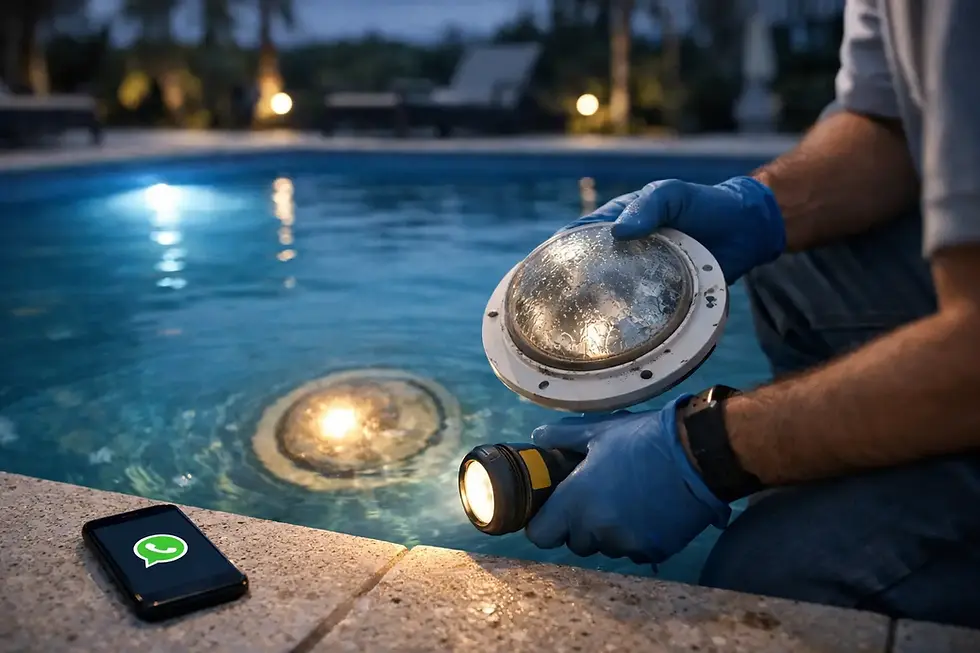
Not necessarily. Minor maintenance and like-for-like replacement work may be handled without the same level of formal approval, particularly when it does not alter the building structure or regulated services. Examples can include replacing failed LED pool lights with equivalent fittings, repairing localized tile damage, renewing worn sealant, or servicing existing filtration equipment.
However, “like-for-like” must be taken seriously. A replacement light still needs suitable waterproof underwater cabling, correct electrical protection, and proper installation. A new pump that appears similar may have a different electrical load, flow rate, or pipe connection requirement. Work may be small in appearance while still creating a safety or compliance issue if it is poorly specified.
Commercial sites often have another layer of requirements: the building owner, managing agent, insurer, operator, or tenant agreement. Even when an authority submission is not needed, the property management team may require work permits, method statements, contractor insurance details, after-hours scheduling, isolation plans, and completion records. These internal controls protect the building and reduce disruption to occupants.
Renovation Works That Need Early Review
The most reliable way to avoid delay is to review the scope while it is still a proposal, not after materials have been ordered. Early review is particularly valuable for the following types of projects:
Converting an overflow pool to a skimmer pool, or changing the gutter and balance tank arrangement
Rebuilding a pool shell, repairing extensive cracks, or carrying out major waterproofing works
Changing pool depth, shape, access steps, ladders, or accessibility features
Relocating pumps, filters, control panels, chemical equipment, or significant pipework
Upgrading electrical supplies, underwater lights, control systems, or waterproof cabling
Altering drainage, discharge points, or connections that affect the building’s plumbing systems
Converting a liner pool to fiberglass, or carrying out a major finish and system conversion
These projects can improve reliability, reduce leakage, improve circulation, and refresh the appearance of an aging facility. But they also involve multiple trades and technical decisions. A proper site assessment helps determine whether the work can proceed as maintenance, requires building management clearance, or needs architectural and M&E submission support.
Why Approval Planning Matters to Pool Operations
The question is not only whether a permit is required. It is also whether the renovation can be completed safely, documented properly, and returned to service without unexpected rework.
Commercial pools are connected systems. A decision to replace a finish may uncover hollow screed, damaged waterproofing, corroded fittings, or pipe leaks. A circulation upgrade may reveal that the plant room has poor access, insufficient drainage, or an electrical supply that no longer suits the equipment. Planning approvals and technical coordination together reduce the risk of discovering these issues midway through a shutdown.
There is also a business case for getting this right. An unplanned closure affects member satisfaction, hotel bookings, resident expectations, and facility schedules. If a renovation has to stop because a required approval or building clearance was missed, the delay can extend well beyond the original work period. Coordinating the scope, submissions, materials, and site access at the start is usually the more economical choice.
A Practical Process Before Renovating a Commercial Pool
Start with a clear condition assessment. The contractor should inspect the pool structure, finish, waterproofing condition, circulation system, plant room, lights, fittings, pipework, and surrounding deck interfaces. The goal is to distinguish a surface issue from an underlying system problem.
Next, define what is actually changing. A scope that says “pool renovation” is too broad for approval planning. Document whether the project includes structural repairs, a new finish, equipment replacement, pipe rerouting, electrical work, drainage changes, or a conversion from one pool system to another. Clear scope prevents assumptions between the facility team, property manager, and project contractor.
Then confirm the approval path. Depending on the work and property, this may involve the building owner or managing agent, relevant authorities, and qualified professionals for architectural or M&E submissions. The requirements can differ between a condominium facility, hotel, school, club, retail development, or standalone commercial site. Do not rely on a previous project at another property as proof that the same process applies.
Finally, build the work program around operations. Plan isolation periods, noise restrictions, access routes, debris control, water drainage, testing, and recommissioning. For high-use facilities, phased work or carefully scheduled closures may be possible, but only if safety and access controls remain practical throughout the project.
Choosing a Contractor That Understands the Full Scope
A commercial pool renovation should not be treated as a tile replacement exercise when the underlying issue may involve waterproofing, hydraulic performance, electrical safety, or aging equipment. The contractor needs to understand how each part of the pool affects the others and when professional submission support is needed.
Look for a team that can assess both visible defects and operational causes. For example, recurring water loss may point to a membrane failure, cracked pipework, leaking fittings, or an overflow system issue. Weak circulation may be caused by undersized equipment, blocked lines, poor balancing, or a plant room layout that makes proper servicing difficult. The right recommendation should address the cause, not just cover the symptom.
RS Pools supports commercial pool renovation work with practical site assessment, technical repairs, system upgrades, and architectural and M&E submission coordination where the project requires it. The focus is straightforward: complete the work properly, protect the facility, and return the pool to dependable operation.
Before committing to any commercial pool renovation, have the scope reviewed against the building’s requirements and the likely approval path. A little diligence before work begins can protect your schedule, budget, and the people who rely on the pool every day.


Comments