
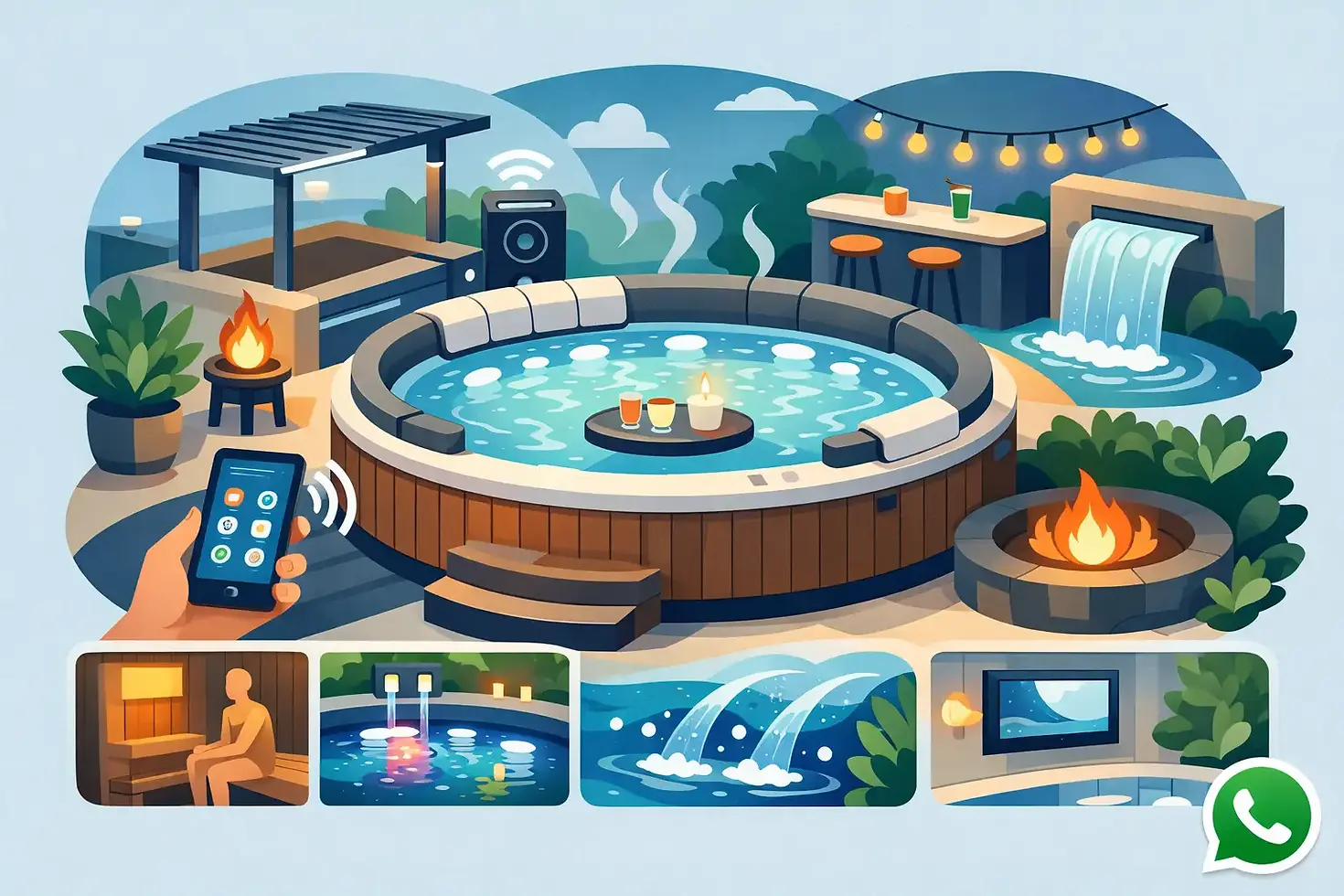
11 Smart Jacuzzi Customization Ideas
- services9139
- Apr 24
- 6 min read
A jacuzzi that looks good in photos but feels awkward to use is usually a design problem, not a budget problem. The best jacuzzi customization ideas are the ones that improve comfort, reliability, and day-to-day enjoyment at the same time. For homeowners, clubs, and commercial facilities, that means thinking beyond surface finishes and choosing upgrades that support how the jacuzzi is actually used.
What good jacuzzi customization ideas should solve
A well-customized jacuzzi should answer a few practical questions. Is the seating comfortable for different users? Does the jet layout make sense, or does it blast one area and leave another dead? Is the lighting attractive without making maintenance harder? Can the system handle regular use without constant breakdowns?
That is where many projects either succeed or disappoint. A jacuzzi is not just a water feature. It is a mechanical system, a wet area finish package, and a user experience all in one. If one part is ignored, the whole result suffers. A beautiful tiled spa with poor circulation or weak heat retention will not feel premium for long.
1. Rework the seating layout for actual comfort
One of the strongest upgrades is also one of the most overlooked. Bench depth, backrest angle, and step positioning have a direct effect on whether people stay in the jacuzzi for ten minutes or forty. Custom seating can create a better balance between upright social seating and deeper reclined positions for hydrotherapy.
This matters even more in shared-use settings. A residential owner may want two more private loungers, while a club or hospitality facility may need a layout that accommodates different body sizes safely. There is no single best setup. The right answer depends on whether the jacuzzi is meant for therapy, relaxation, or group use.
2. Upgrade the jet configuration, not just the jet count
More jets do not automatically mean a better soak. Placement, pressure balance, and pump compatibility matter more than the raw number of fittings. Good customization looks at where users need support - lower back, shoulders, calves, or feet - and then matches the jet pattern to those zones.
In older jacuzzis, uneven jet pressure is common. Some seats feel powerful, while others feel underwhelming. Reconfiguring the plumbing lines or replacing outdated jet assemblies can make the experience more consistent. There is a trade-off, though. Higher-performance jet systems may require pump upgrades, and that should be assessed early instead of added as an afterthought.
3. Use lighting to shape the mood and improve visibility
LED lighting is one of the easiest ways to change the character of a jacuzzi, but it should be done with restraint. Well-placed underwater lights, step lights, and perimeter accents can make the spa feel cleaner, calmer, and more premium. Poorly placed lighting can create glare, harsh shadows, or a color effect that feels dated very quickly.
For residential projects, warm white or carefully selected color-changing modes usually work better than constant dramatic color cycles. In commercial settings, lighting should also support safety and easy monitoring. Waterproof cabling and proper fixture placement matter here because lighting failures in wet environments are rarely just cosmetic issues.
4. Choose interior finishes that are attractive and practical
Tile selection gets a lot of attention, and rightly so. The finish defines much of the visual identity of the jacuzzi. But the best choice is not always the most expensive or the most eye-catching. Surface texture, grout performance, and long-term cleanability matter just as much as color.
Darker finishes can create a sleek look, but they may show scale or residue differently depending on water conditions. Lighter finishes often feel cleaner and brighter, though they may reveal staining or grout wear over time. In high-use facilities, durability should carry more weight than trend. The right finish should still look good after repeated chemical exposure, heat, and cleaning cycles.
5. Add overflow, skimmer, or circulation improvements where needed
Some customization ideas are invisible once the job is complete, but they make a bigger difference than decorative upgrades. If a jacuzzi has recurring water quality issues, poor skimming action, or inconsistent circulation, improving the hydraulic performance is often the smartest investment.
This can involve reworking suction and return points, updating balance tank-related components, or converting system arrangements where appropriate. These are not glamorous changes, but they directly affect water clarity, hygiene, and user confidence. For property managers, this type of upgrade often pays back in fewer complaints and fewer service disruptions.
6. Build in easier access for maintenance
A jacuzzi should not be customized in a way that makes every future repair harder. This is a common mistake in renovations where the visual finish is prioritized but access to pumps, valves, control systems, or lighting connections becomes cramped or blocked.
Smart planning leaves room for serviceability. Access panels, equipment positioning, and cable routing should be considered part of the design, not separate from it. This is especially important for facilities with frequent operating hours, where downtime is expensive and delayed repairs affect users immediately.
Jacuzzi customization ideas for better system performance
The most effective jacuzzi customization ideas usually combine appearance with engineering improvements. If the goal is long-term value, the mechanical side of the upgrade should be reviewed as carefully as the visible finishes.
7. Improve heating efficiency and control response
A jacuzzi that takes too long to heat or struggles to hold temperature will always feel compromised. Upgrading heaters, sensors, control panels, or circulation timing can improve both comfort and operating efficiency. The best setup depends on usage patterns. A private home may prioritize fast on-demand heat, while a club facility may need dependable temperature stability across longer hours.
Controls matter as much as hardware. If settings are confusing or unreliable, users and staff end up fighting the system instead of enjoying it. Better control integration can reduce that friction and make daily operation simpler.
8. Reduce noise from pumps and equipment
Noise is rarely the first item on a customization list, but it has a major effect on how premium a jacuzzi feels. Vibration, humming pumps, and poorly isolated equipment can turn a relaxing area into a mechanical one.
In some projects, the answer is equipment replacement. In others, it is better mounting, repositioning, or pipe support correction. It depends on the cause. The key point is that a quiet jacuzzi often feels more luxurious than one with extra visual features but constant background noise.
9. Upgrade entry steps and safety details
Safety features do not need to look clinical. Entry steps, ledges, grip-friendly surfaces, and better depth transitions can all be integrated cleanly into the final design. This is particularly important when a jacuzzi serves mixed age groups or commercial users.
A good upgrade reduces slip risk and improves confidence when entering or exiting the water. It also lowers the chance of wear from users stepping on areas that were never meant to act as access points. Practical detailing often prevents future damage.
10. Refresh the edge profile and surrounding visual lines
Even without changing the entire structure, adjusting the coping line, edge finish, or visual border can make a jacuzzi look newer and more intentional. This is useful when the shell is sound but the appearance feels dated.
The right edge treatment can help the jacuzzi sit better within the larger pool area and create a cleaner, more finished look. The main consideration is material compatibility. New finishes should not be chosen in isolation if they will clash with existing pool surfaces or create maintenance issues at the joints.
11. Customize for the way the space is really used
This sounds obvious, but many upgrades fail because they copy a showroom look instead of solving a real usage pattern. A homeowner who wants evening relaxation may prioritize lighting, quiet operation, and deeper hydrotherapy seats. A condominium or club may care more about durability, easy cleaning, balanced circulation, and safer access.
That is why the best customization process starts with inspection and usage planning, not product selection. A technical review can identify which parts of the existing jacuzzi are worth keeping and which need to be rebuilt or upgraded. In many cases, a targeted renovation delivers better value than a full cosmetic overhaul.
How to prioritize your jacuzzi upgrade budget
If the budget does not cover every idea at once, start with the items that affect function first. Seating geometry, jet performance, circulation quality, heating reliability, and maintenance access usually deserve priority over decorative extras. Once those are right, lighting and finish upgrades have much more impact because they sit on top of a strong foundation.
This is also where experienced workmanship matters. A jacuzzi is a compact space, which means small errors in levels, pipe routing, waterproofing, or fitting placement are harder to hide. Getting the technical work right protects the finish work and reduces the risk of callbacks later.
For owners and facility managers, the most successful projects are rarely the flashiest ones. They are the jacuzzis that feel comfortable, operate reliably, and still look sharp after months of use. If you approach customization with that standard in mind, every upgrade decision becomes clearer.
A well-planned jacuzzi should do more than impress on handover day. It should keep performing, keep looking right, and keep earning its place every time someone steps into the water.


Comments